Showing posts with label Writing Power Tools. Show all posts

3/7/07

Total Writing Improvement


All writing involves three elements. Whether it’s scribbling in your journal, landing a byline in a major magazine, or writing for a TV show, these three elements are present and inescapable.

Thought

All writing begins with thought. Words and sentences only have value because they represent ideas and concepts and do so in a way that many people understand. Without those ideas and concepts, language is meaningless. What we actually create and sell, as writers, are thoughts.

Words and Language

Now, in order for those thoughts to be accessible or intelligible to anyone else, they need to be translated from raw thought into some form that others can understand. Communication of thought is the sole purpose of language. As said before, the value of words lie in the thoughts they convey to others.

Media and Technology

Finally, once we’ve figured out the words that represent our thoughts, we must record them in some way. Cave men painted on walls, the Egyptians wrote on papyrus, we use computers. Whatever the technology used, regardless of the medium that conveys the message, it isn’t writing until it’s written. Media and technology are the form and means used to record the thoughts we originally had.


The Bottom Line

We all want to write well. Many want to also write more, and thus earn more money. Both quality and quantity can be improved by focusing on improving how we use and work with each of these three portions of the whole writing process. By improving our initial thought processes, we improve both the crafting and marketing of our writing. By fine tuning our use of language, we are better able to write clearly and reach audiences effectively. By training ourselves in media and technology, we become more skilled with the tools we use in our art.

3/1/07

Writing Prompt Calendar: Toasted Cheese

You may want to check out Toasted Cheese, a website for writers that may just have the best name ever. More importantly, they have a calendar which includes a daily writing prompt - that's right, 365 days of writing prompts!


2/21/07

Web 2.0 for Writers


Have you seen Go2Web2.0? It's an entire listing of high quality online sites, each featuring the stereo typical funky names, slick designs and handy buttons. Among this list (which includes more than 800 internet based products and companies) are some powerful online tools for writers. Here are just a few:


Calenders, like HipCal and 30Boxes


To Do Lists, like Nozbe and Vitalist


Online Word Processors, like Writely


Online Storage, like Box and FileLabs


This massive list is a collection of some of the coolest powertools on the web. I strongly suggest checking it out.

1/25/07

Power Tool: Mind Mapping


I've posted in the past about the joy of online mind mapping. The latest in this happy family is a site called bubbl.us.The beauty of those bubbliscious drag-and-drop boxes is fairly mesmerizing. I'm tempted to spend all day organizing thoughts, even those that didn't need organizing! Not only is this a handy tool for organizing information, I find it to be a fantastic brainstorming tool. In minutes I was able to generate a handful of excellent ideas, simply by sifting through what was already in my head.

Sadly, the site I posted on previously - Mayomi - is now gone. As I hold a personal moment of silence, I also say a tiny prayer that Bubbl.us finds more success. Because they actually have some kind of profit generating scheme in place (selling ad space in the side bar) it sounds much more feasible.
FYI: Thanks to Dumb Little Man for the heads up on this.

1/17/07

Creative Flow

Blogging self-help guru Steve Pavlina has a post outlining how to maximize your creative output.

He makes some great points in his post, and I just wanted to comment on how they apply specifically to writers. Listed below are his 7 Rules, followed by my thoughts on each.

1. Define a clear purpose


As a writer, it's not always easy to say "I'm now going to write x number of pages on (insert topic here)." However, as professionals, that's exactly what we need to do. Sit down with a clear goal in mind, even if that goal is simply to fill a set amount of time or a certain number of pages in free writing. Every time you do something as a writer, it should have a purpose. Here's a few preset purposes that I'm trying to integrate into my day to day work.


  • Brainstorm x number of ideas
  • Pick one of these ideas and develop it
  • Write one full query letter/e-mail, then send it
  • Contact this person
  • Learn at least one thing about my topic
  • Find at least one article idea
  • Find five new markets to query
  • Finish a first draft, no matter how crappy it is
The list might go indefinitely. The point is that if any writer is to get the most out of their time, they need to direct their energies a bit. (I'll post more on this later.)
2. Identify a compelling motive


As a writer, there are at least two motives that should always motivate us a little. One is seeing our names in beautiful black ink. The other is getting paid, earning the dinero, bringing in some moolah. Even on a bad day, while working on an article that's about as inspiring as mud, these two things ought to at least get you going a little bit.


Then, there's the added motivators of editors and deadlines.


Even more than this, find stories you really want to write. Find topics that excite you, things that interest you. Carve out a comfortable niche in this area, and your motivational needs should be a lot easier to meet.

3. Architect a worthy challenge


Every piece of writing should challenge you to do your best work. I know it doesn't always, but it should. The better your work, the better your image and the more freedom you have to earn some actual money and write what you want to write.

4. Provide a conducive environment


This is one of those points that I agree wholeheartedly with, but almost wish hadn't been mentioned. Yes, you should find the best place to work that you can. However, that doesn't mean you obsess over every detail, constructing your own little Fortress of Solitude in which to work.

For a writer, the most conducive environment is the one that has your butt in front of the computer and your fingers on the keyboard. Typing. Anything else is a distraction, and therefore not conducive to your work, which is actually writing.

5. Allocate a committed block of time.

This is absolutely necessary, especially for anyone who intends to make any serious effort at writing for a living. It's a business, treat it as such. This means scheduling time and following that schedule.

6. Prevent interruptions and distractions.

Like I mentioned about the conducive environment, the most important issue is that you get writing. You probably don't need to build a private study onto your home. Get yourself a computer, get yourself a pair of head phones, and then just write. let those around you know that you're "at work", then get to work. Don't obsess about the things that might disturb your writing - just write.

7. Master your tools.

This is a must. You have a number of tools as a writer, and the better you know how to use them, the more effective you'll be. A writer today is better equipped to research and write than any writer in any other age. You've got the Internet and e-mail, you've got a word processor, you've got a phone. heck, those things are even made highly portable these days. You can literally do it all with just a laptop and a cell phone.

However, you need to know your tools.

Learn your word processor inside and out. Know the important functions and keyboard shortcuts. Figure out how to create columns and build tables and insert pictures. That's all basic stuff. Know the basics the same way you know how to tie your shoes.

Learn how to do serious research on the Internet. Google and Wikipedia are great, but they're like baby food. A professional wants something more substantial. Learn about databases, online newsletters, associations, etc. (I'm actually going to do a post or three about this very topic in the near future.)

Finally, always be improving your ability to write. Words are your stock in trade. Grammar is more than just your friend. Formats and styles are need to know information for you.

If you're a doctor, you know how the body works, and you know it better than anyone else. Writers should be equally knowledgeable about the language they write in.

11/21/06

Mind Mapping Powertool


For those who are already familiar with the practice of mind mapping, I don't need to tell you how effective it can be as a way of generating and organizing your thoughts. You guys can skip to the link.


For those of you who are new to mind mapping, listen up. If you're looking for a way to boost your brainstorming, mind mapping is for you. If you're looking for a way to organize an array of varied bits of information, mind mapping is the tool you need. Try, use it, love it, tell others. It's that good.


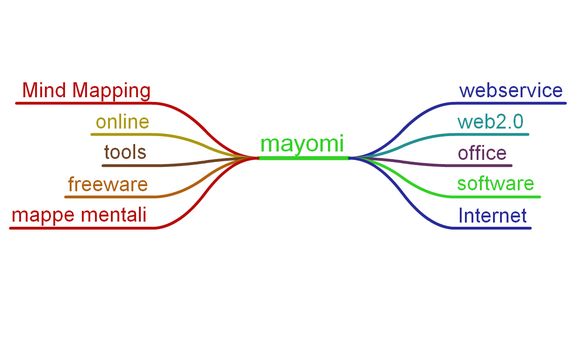
Mayomi, which I'm assuming is the partial abbreviation of Map Your Mind, is a free web-based peice of mind mapping software. It's well designed, easy to use and looks slicker than a greased pig. I've been using it a lot lately, and think everyone else should, too.

11/20/06

More Advice from the Renegades

I'm not sure how it happened, but even though I make a near-daily perusal of the Renegade Writer's Blog, I missed a veritable gem of advice. Judging by the lack of comments, so did everyone else.

Linda Formichelli, co-author of the RW books, suggests using Amazon's search function to track down experts with recently published or soon-to-be published books. They're established experts, which is good for you. They have a book to promote, which is good for them. It's brilliant!

11/11/06

Easy Character Visualization

I know that one of the things I sometimes have trouble with is keeping a clear image of a character in my mind. Did that guy have a goatee, or was it a full beard? Didn't I just mention how that guy's nose was a bit hawkish?

Othertimes, it helps to have the character looking at you in order to give them a name. But how could you do this without having access to a professional police sketch artist? Ah-ha, how about a computerized sketch artist? We, here you go - a flash version of facial composite software. http://flashface.ctapt.de/